Gone are the days of children playing and adults conversing on their front lawns... these days it's more like the kids hunkered down in their rooms with video games and their parents are coming home, pulling their cars into the garage, never even setting a foot outside in the front of their homes accept when they're getting the mail from their "community" mail box. What use is a front yard? Why do you even need a lawn in the front of your home if it doesn't serve a function?
Maybe we should all tear out the lawns in front of our homes... unless you have a HOA, then you better check before you grab that rototiller and shovel. Turf takes an incredible volume of water to stay green and thrive, why waste this precious resource if a lawn isn't necessary? Where to begin...
Let's start by evaluating programs for water efficient landscaping for the greater Sacramento area:
Sacramento County Rain Garden Program
Sacramento County River-Friendly Landscaping Guidelines for Lawns
California Department of Water Resources Landscape Guidelines
Federal EPA Landscape Design Tips
With these resources it's quite easy to come to terms with removing the lawn in front of your home; there are so many options to choose from. Below is a link to a photo gallery of local front yards that have already transitioned to more water-friendly, drought tolerant landscaping:
Lose the Lawn photo gallery
Whether you want hardscaping, a rock garden, drought tolerant garden, or even xeriscaping, you have a wide range of choices at your disposal with even the possibility of rebates and grants depending on where your home is located. Close your eyes and picture driving or walking up to your home... do you picture a green lawn and a few sparse plantings or do you picture a colorful palette of flowers and leaves, rock and glass, and butterflies and birds fluttering around your front garden? If you don't use your front yard for anything but wasting water you mine as well let the birds and butterflies enjoy it... and maybe even some of your neighbors if they're hip to the idea.
Friday, January 27, 2012
Tuesday, January 24, 2012
The Art of Repurposing
This is a little pet project I'd like to share that embodies the very essence of reuse, recycle, reclaimed, and repurposed.
Here we have a wonderful old console TV that I'm sure so many have discarded over the years to the bulging landfills... one man's junk, can truly be another man's treasure.
Large amount of e-waste that was properly recycled by a reputable e-waste recycler... I wonder how long all of this would take to decompose in the landfill?
Gutted, sanded, and ready to be primed, painted, and stained. The interior shelves have been constructed from some scrap pine and some pieces of press board from another old piece of furniture.
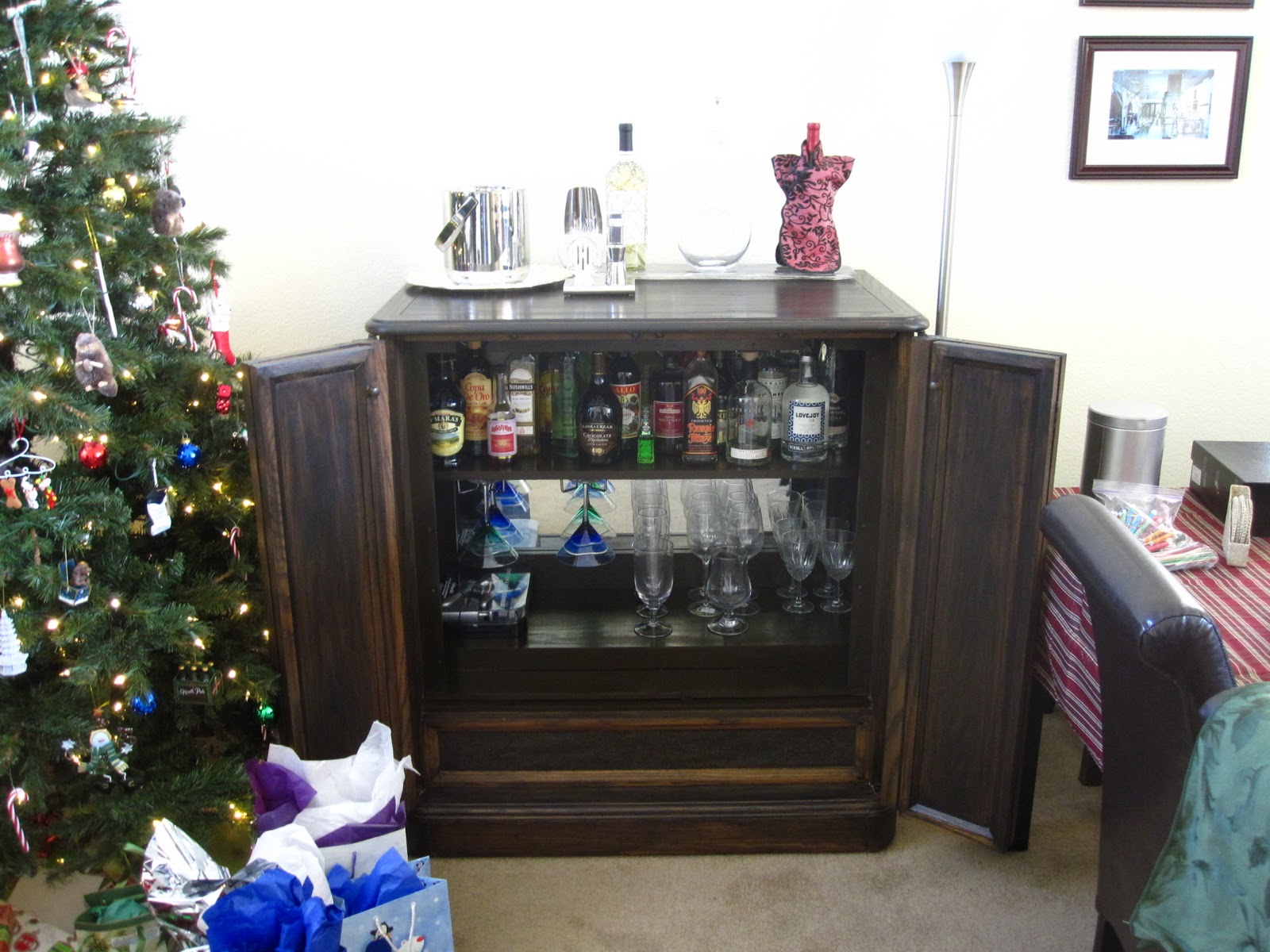
An old TV cabinet has now been given new life as a swanky cocktail bar complete with reclaimed mirror bar backing, low VOC interior paint, non toxic water-based stain, and repurposed under cabinet lighting. At the bottom, where the old speaker used to be has now been converted to wine storage complete with a hidden hinged front door panel. This same furniture piece could easily cost someone anywhere between $500 to $1000 at a retail furniture store, but all I had to do is use a little ingenuity, a little elbow grease, and save one man's junk from the landfill.
Here we have a wonderful old console TV that I'm sure so many have discarded over the years to the bulging landfills... one man's junk, can truly be another man's treasure.
Large amount of e-waste that was properly recycled by a reputable e-waste recycler... I wonder how long all of this would take to decompose in the landfill?
Gutted, sanded, and ready to be primed, painted, and stained. The interior shelves have been constructed from some scrap pine and some pieces of press board from another old piece of furniture.
An old TV cabinet has now been given new life as a swanky cocktail bar complete with reclaimed mirror bar backing, low VOC interior paint, non toxic water-based stain, and repurposed under cabinet lighting. At the bottom, where the old speaker used to be has now been converted to wine storage complete with a hidden hinged front door panel. This same furniture piece could easily cost someone anywhere between $500 to $1000 at a retail furniture store, but all I had to do is use a little ingenuity, a little elbow grease, and save one man's junk from the landfill.
Wednesday, November 16, 2011
Building Green Doesn't Mean It Has To Be Modern
I think there's a group of folks out there that are apprehensive about green building and sustainable design due to the number of projects that have a very modern, minimalist design aspect to them. To some folks modern design can have a sterile, cold feel to it, especially for folks that are drawn to traditional styles such as Victorian or Cape Cod.
On a recent visit to New Orleans I witnessed many green building projects that were embracing the traditional Spanish and French styles of city such as Creole cottages and "shotgun" homes. A city like New Orleans strives to preserve it's architectural heritage and even when it comes to modernization of building components or sustainable upgrades, the builders, designers, and architects still manage to protect architectural aesthetics and historical design significance. Witnessing this evolution of building and design really gave me a lot to think about with regards to Sacramento and those who have a stigma against green building and design.
Green building and sustainable design does not have to consist of metal, concrete, and wood slathered interiors and exteriors. Sacramento architecture is known for it's wonderful American Craftsman style and Spanish Revival homes, and we could easily use some of the design features of these architectural styles in new green homes or green remodels... some features of these older homes were "green" before "green" existed!
Take Spanish Revival and its Mediterranean cousin: passive solar and excellent thermal design qualities, use of courtyard design for maximum air circulation... constructed using thicker, plaster covered walls, use of tile for longevity and wear, and the list really does go on. American Craftsman architecture gives us wonderful large eaves and overhangs for shading, excellent use of interior space with the incorporation of built-ins, deep set window casings for natural shading, beautiful porches to protect from the elements, and the list also goes on too.
I believe the best route for going green is to first develop an architectural style and then find a way to work in green materials and products, reclaimed and recycled materials, and sustainable principals so that you don't let the materials dictate the outcome. You can get all the LEED points in the world, but if you're not truly comfortable in your home or with your home's aesthetics you are only asking for trouble down the road with regards to the sustainability of your home.
Check out these links to see what's happening in New Orleans:
The Green Project
Make It Right
Musicians' Village
On a recent visit to New Orleans I witnessed many green building projects that were embracing the traditional Spanish and French styles of city such as Creole cottages and "shotgun" homes. A city like New Orleans strives to preserve it's architectural heritage and even when it comes to modernization of building components or sustainable upgrades, the builders, designers, and architects still manage to protect architectural aesthetics and historical design significance. Witnessing this evolution of building and design really gave me a lot to think about with regards to Sacramento and those who have a stigma against green building and design.
Green building and sustainable design does not have to consist of metal, concrete, and wood slathered interiors and exteriors. Sacramento architecture is known for it's wonderful American Craftsman style and Spanish Revival homes, and we could easily use some of the design features of these architectural styles in new green homes or green remodels... some features of these older homes were "green" before "green" existed!
Take Spanish Revival and its Mediterranean cousin: passive solar and excellent thermal design qualities, use of courtyard design for maximum air circulation... constructed using thicker, plaster covered walls, use of tile for longevity and wear, and the list really does go on. American Craftsman architecture gives us wonderful large eaves and overhangs for shading, excellent use of interior space with the incorporation of built-ins, deep set window casings for natural shading, beautiful porches to protect from the elements, and the list also goes on too.
I believe the best route for going green is to first develop an architectural style and then find a way to work in green materials and products, reclaimed and recycled materials, and sustainable principals so that you don't let the materials dictate the outcome. You can get all the LEED points in the world, but if you're not truly comfortable in your home or with your home's aesthetics you are only asking for trouble down the road with regards to the sustainability of your home.
Check out these links to see what's happening in New Orleans:
The Green Project
Make It Right
Musicians' Village
Monday, June 13, 2011
Getting the most from your ceiling fan
With the heat finally here in Sacramento it's time to start looking at our methods of keeping our homes effectively cooled. Many homes in the California Central Valley have ceiling fans, but a large majority of folks out there are not educated on how they can get the most efficiency from their ceiling fans.
Ceiling fans can rotate either clock-wise or counter clock-wise and each direction serves a different purpose.When using your ceiling fan for cooling purposes, it's very important that you have your fan set to rotate counter clock-wise allowing for the fan to create a breeze that makes your body feel cooler. Ceiling fans are meant to cool people, not rooms... the cool breeze effect will allow you to raise the thermostat of your A/C reducing usage, but a ceiling fan is not designed to cool a room, only people in the room.
A lesser known use for a ceiling fan is warm air circulation in winter when home heating is necessary. When you are heating a room in cold seasons, a ceiling fan can be switched to rotate clock-wise allowing for the rising warm temperature in a room to be pulled down from the ceiling and distributed throughout the room. It is very important that when using a ceiling fan for warming a room you should keep the fan speed very low or else you'll be feeling a breeze that's more useful in warmer seasons.
Just like any appliance, ceiling fans also have ratings for efficiency and some even come backed by ENERGY STAR. Make sure you you get the best out of your ceiling fan(s)... they've stood the test of time for a reason and who really doesn't like to get the most out of something?
Ceiling fans can rotate either clock-wise or counter clock-wise and each direction serves a different purpose.When using your ceiling fan for cooling purposes, it's very important that you have your fan set to rotate counter clock-wise allowing for the fan to create a breeze that makes your body feel cooler. Ceiling fans are meant to cool people, not rooms... the cool breeze effect will allow you to raise the thermostat of your A/C reducing usage, but a ceiling fan is not designed to cool a room, only people in the room.
A lesser known use for a ceiling fan is warm air circulation in winter when home heating is necessary. When you are heating a room in cold seasons, a ceiling fan can be switched to rotate clock-wise allowing for the rising warm temperature in a room to be pulled down from the ceiling and distributed throughout the room. It is very important that when using a ceiling fan for warming a room you should keep the fan speed very low or else you'll be feeling a breeze that's more useful in warmer seasons.
Just like any appliance, ceiling fans also have ratings for efficiency and some even come backed by ENERGY STAR. Make sure you you get the best out of your ceiling fan(s)... they've stood the test of time for a reason and who really doesn't like to get the most out of something?
Labels:
ceiling fan,
cooling,
energy savings,
heating,
rotation
Thursday, May 26, 2011
Find New Homes For Your Junk... Out In Your Yard
In the age of sustainable design, why is it that I still find myself driving by mountains of junk sitting in front of people's homes waiting for trash pick up? Instead of spending tons of money at home stores and nurseries why not repurpose your old junk into new landscape creations.
Anything can be reused or repurposed with a little elbow grease. Do you have an old, broken ironing board you want to get rid of? How about turning that old ironing board into a plant shelf or maybe a whimsical cocktail bar?
There are so many options when you reuse or repurpose things you consider junk. An old BBQ can become a fire pit or a rustic planter, broken pottery or glass can become decorative mulch for planters, old counter tops can be broken into pieces and become stepping stones, the list truly is endless.
Anyone can be green and practice sustainability if you stop and think before you throw things away. Take a step back and look at the item, use a little imagination, you never know what you might come up with. People always use the expression, "one man's junk is another man's treasure", but maybe we can figure out how our own junk can be made into our own treasure?
Labels:
junk,
landscaping,
reuse,
sustainable design
Thursday, May 5, 2011
Check out Energy Upgrade California
If you haven't already... be sure to check out the Energy Upgrade California website. All you have to do is enter "Sacramento County" and you will be brought to a specialized page that gives you rebates and incentives that are available in Sacramento County for doing "green" upgrades. You can also locate certified contractors in your area along with all kinds of tips and facts.
This is a cooperative program that is funded by the American Recovery and Reinvestment Act and managed by the California Energy Commission. The basis of the program is to help raise energy efficiency percentages for California residents while helping out of work contractors get the necessary training to do the energy retrofit work. This program is truly a "win win" program for residents of California.
Thursday, March 17, 2011
Check out my new column at the Sacramento Examiner
Along with my own blog here at It Pays To Be Green In The Valley I am now writing for the Sacramento Examiner as their Green Building Materials Examiner. If you have time you should definitely check it out:
http://www.examiner.com/green-building-materials-1-in-sacramento/benjamin-griffin
Labels:
Examiner,
green building,
materials,
Sacramento
Saturday, March 12, 2011
Nature's Affordable, Efficient Patio Cover
Valley residents love to get their shade from pre-fab, aluminum patio covers. Proper shading of one's home is essential in the sunny California Central Valley, but at what price? Why not take advantage of one of Mother Nature's greatest patio covers... trees.
When properly placed on your lot, a tree can be the best kind of patio cover. Whether you're looking for shade all year long (evergreen), or you're looking for low winter sun to warm your home (deciduous), the right kind of tree can fit your needs.
Besides being green and environmentally friendly, you can also have your natural patio cover free if you live in the Sacramento area. Through a partnership with SMUD and the Sacramento Tree Foundation, Sacramento County residents and SMUD customers can get shade trees free of charge. This service allows you to have a community forester come to your home, check your lot and home dimensions for perfect placement, and figure out what would be the best option to shade your home and help you with energy costs and carbon offsets. It really is a great program in so many ways.
With all of this being said, would you rather spend thousands of dollars on an aluminum patio cover that's comprised of materials from all over the world with who knows what kinds of chemicals; or would you rather have a beautiful shade tree that helps you, your neighbors, and probably the greater community?
When properly placed on your lot, a tree can be the best kind of patio cover. Whether you're looking for shade all year long (evergreen), or you're looking for low winter sun to warm your home (deciduous), the right kind of tree can fit your needs.
Besides being green and environmentally friendly, you can also have your natural patio cover free if you live in the Sacramento area. Through a partnership with SMUD and the Sacramento Tree Foundation, Sacramento County residents and SMUD customers can get shade trees free of charge. This service allows you to have a community forester come to your home, check your lot and home dimensions for perfect placement, and figure out what would be the best option to shade your home and help you with energy costs and carbon offsets. It really is a great program in so many ways.
With all of this being said, would you rather spend thousands of dollars on an aluminum patio cover that's comprised of materials from all over the world with who knows what kinds of chemicals; or would you rather have a beautiful shade tree that helps you, your neighbors, and probably the greater community?
Labels:
carbon offsets,
patio cover,
shade,
SMUD,
sun,
trees
Saturday, November 20, 2010
A Public Service Announcement For Those Who Water The Road...
This is my PSA for all of you out there who waste water with your lawn sprinklers! Either you have no idea they need adjusting, you don't know how, or maybe you just don't care? Whatever the reason may be, as a homeowner or building owner it may be worth your while to learn how to take care of your lawn irrigation system or possibly hire someone to do it for you.
I know there is information all over the place regarding taking care of your lawn irrigation system. I see information from water districts, pamphlets at hardware stores, television campaigns, and even signs on buses going down the street... what will it take for people to take notice of their water wasting ways? I implore you to take a look at your water bill... what does it show? Would you like it to be lower? How about going "green" without spending tons of money ripping out your lawn or installing expensive irrigation equipment?
Well, this is my list of common problems I see on a continuous basis and how you can correct them and save some money and conserve water:
If you pay attention to your lawn irrigation system you can really do your part to conserve water, help the environment, and also put a little "green" back in your pocket at the same time. You don't have to go out and put in a drought tolerant garden or permeable paving... you just need to be a little more consciences and take care of what you all ready have. Too many homeowners and business owners are out there right now wasting water and money just because they're lazy or they just don't care. It's up to you to do your part... now go outside and do some "public service" and make sure your lawn sprinklers are watering your lawn... not the road!
I know there is information all over the place regarding taking care of your lawn irrigation system. I see information from water districts, pamphlets at hardware stores, television campaigns, and even signs on buses going down the street... what will it take for people to take notice of their water wasting ways? I implore you to take a look at your water bill... what does it show? Would you like it to be lower? How about going "green" without spending tons of money ripping out your lawn or installing expensive irrigation equipment?
Well, this is my list of common problems I see on a continuous basis and how you can correct them and save some money and conserve water:
- Please don't water you lawn or planting beds in the middle of the day... you lose tons of water to evaporation and if the temperature is hot you run the risk of scalding your plants or lawn. Every water district has a watering time frame they tell their customers... watering in the early morning from 1AM to 5AM is a great time frame to run sprinklers.
- There is no need to run your sprinklers every single day, especially in wet seasons! It's funny, even in the summer months I water my lawn 2 to 3 times a week and my lawn is just as green as the folks next to me who run their sprinklers every single day... they even run their sprinklers in the rainy season! With proper maintenance and spray measurements you can easily maximize your watering and eliminate the need for constant and over-watering.
- Please take notice that your sprinklers are watering the road or your neighbor's house! There are different sprinkler heads for different uses and they can easily be adjusted with a screw driver if they're standard spray heads or adjusted by hand if you have impact rotor sprinklers. All sprinkler heads state the pattern of spray and how far the spray can travel. If you have a 3' section of lawn, please don't install a sprinkler that sprays 10' in a full circle pattern! If you match the right sprinkler with the right size area to be watered you will save water, head aches, and lots of money in the long run.
- If you have a broken sprinkler head... replace it. Whether it's you or the gardener down the street, someone needs to replace the broken sprinklers in your yard. Maybe you don't notice because your sprinklers run at night, but you will notice when you look at your water bill a little closer. A broken lawn sprinkler head can waste gallons of water and hurt you lawn and plants by either over watering or under watering depending on which way the wasted water is flowing. If the broken sprinkler is close to you home or garage you may develop foundation problems over time if all that wasted water is soaking into the ground where a building's foundation is located. The choice is yours... spend a couple dollars to fix a sprinkler or suffer the consequences down the road in a more costly situation.
If you pay attention to your lawn irrigation system you can really do your part to conserve water, help the environment, and also put a little "green" back in your pocket at the same time. You don't have to go out and put in a drought tolerant garden or permeable paving... you just need to be a little more consciences and take care of what you all ready have. Too many homeowners and business owners are out there right now wasting water and money just because they're lazy or they just don't care. It's up to you to do your part... now go outside and do some "public service" and make sure your lawn sprinklers are watering your lawn... not the road!
Labels:
adjustment,
angles,
drought,
irrigation,
lawn sprinklers,
pulsating,
rotary,
spray,
water conservation,
water times
Friday, November 5, 2010
Brick In The Tank???
How many people remember the old brick in the toilet tank trick for saving water? It was a clever trick during those water shortages and droughts of the past, but never truly a great fix for those water wasting toilets. I always wondered if people considered the downside of putting a brick in a tank of water... how about the clay residue clogging pipes and the flushing mechanism? Many other ideas came throughout the years after the "brick trick"... bottles full of sand, metal such as bolts and screws, and bottles full of water.

There were all kinds of novel ideas, but many failed due to trapped air, evaporation, or too much movement causing conflict with the toilet's mechanics. Even more prevalent was the fact that a small bottle of water only displaced a small amount of water compared to the gallons flushed of all the toilets before the standard 1.6 GPF, (gallons per flush).
New low-flow and dual flush toilets have now entered the picture and become the standard for green building enthusiasts, but what about those who have a perfectly good toilet and don't want to spend or waste the money for a new toilet? How about a water displacement bag designed for toilet tanks or a conversion kit that converts your standard toilet to a dual flush toilet?
There are a lot of great products on the market these days to help folks who have water hogs for toilets. It's very important to focus on toilets when it comes to water conservation; a large amount of your home's water usage is due to flushing toilets. Current plumbing code standards call for a minimum of 1.6 GPF, but I know there are still a large number of toilets out there that are flushing at a rate of 3.75 GPF and higher... which means it's time to take action, and figure out what you can do to fix the problem and save yourself some money.
In the Sacramento Valley you can find water displacement bags and dual flush conversion kits at some large hardware stores and limited small hardware stores. The best source is to order from the internet from Amazon.com and their associates or from conservation sites like the following:
New Resources Group
its easy being green
It's also a good idea to check with your local water provider to see if they offer any incentives or free products!
Subscribe to:
Posts (Atom)