As of last month, The Home Depot in conjunction with the U. S. Green Building Council has rolled out a new online database of The Home Depot's over 2,500 products and materials that can be used towards points or prerequisites on LEED for Homes projects.
Be sure to check out the site here: LEED Home Depot
Even if you're not involved with LEED or green building in general, the benefit of this database is truly great for folks looking to use green or Eco-friendly products and materials and aren't looking to spend all day at their local Home Depot searching labels.
Friday, March 9, 2012


Monday, March 5, 2012
Green California Summit next month April 26, 2012
It's that time of year again, the Green California Summit is back once again, taking over the Sacramento Convention Center. This year the summit has been scaled back to 2 days rather than the normal three, taking place on April 26th and 27th. This years theme is, "Building a Green Future for the Golden State".
Registration opened last moth for attendees, and currently key note speakers have not been identified for this years summit. Please check the site for a list of scheduled vendors and sponsors.

The Green California Summit usually has a little bit of everything allowing for attendees to find something to perk their interest whether it be new technology, automobiles, contractors, or educational materials. Make sure you check it out and explore to find out what perks your interest.
Registration opened last moth for attendees, and currently key note speakers have not been identified for this years summit. Please check the site for a list of scheduled vendors and sponsors.
The Green California Summit usually has a little bit of everything allowing for attendees to find something to perk their interest whether it be new technology, automobiles, contractors, or educational materials. Make sure you check it out and explore to find out what perks your interest.
Friday, January 27, 2012
Repurposing Your Front Lawn
Gone are the days of children playing and adults conversing on their front lawns... these days it's more like the kids hunkered down in their rooms with video games and their parents are coming home, pulling their cars into the garage, never even setting a foot outside in the front of their homes accept when they're getting the mail from their "community" mail box. What use is a front yard? Why do you even need a lawn in the front of your home if it doesn't serve a function?
Maybe we should all tear out the lawns in front of our homes... unless you have a HOA, then you better check before you grab that rototiller and shovel. Turf takes an incredible volume of water to stay green and thrive, why waste this precious resource if a lawn isn't necessary? Where to begin...

Let's start by evaluating programs for water efficient landscaping for the greater Sacramento area:
Sacramento County Rain Garden Program
Sacramento County River-Friendly Landscaping Guidelines for Lawns
California Department of Water Resources Landscape Guidelines
Federal EPA Landscape Design Tips
With these resources it's quite easy to come to terms with removing the lawn in front of your home; there are so many options to choose from. Below is a link to a photo gallery of local front yards that have already transitioned to more water-friendly, drought tolerant landscaping:
Lose the Lawn photo gallery
Whether you want hardscaping, a rock garden, drought tolerant garden, or even xeriscaping, you have a wide range of choices at your disposal with even the possibility of rebates and grants depending on where your home is located. Close your eyes and picture driving or walking up to your home... do you picture a green lawn and a few sparse plantings or do you picture a colorful palette of flowers and leaves, rock and glass, and butterflies and birds fluttering around your front garden? If you don't use your front yard for anything but wasting water you mine as well let the birds and butterflies enjoy it... and maybe even some of your neighbors if they're hip to the idea.


Maybe we should all tear out the lawns in front of our homes... unless you have a HOA, then you better check before you grab that rototiller and shovel. Turf takes an incredible volume of water to stay green and thrive, why waste this precious resource if a lawn isn't necessary? Where to begin...

Let's start by evaluating programs for water efficient landscaping for the greater Sacramento area:
Sacramento County Rain Garden Program
Sacramento County River-Friendly Landscaping Guidelines for Lawns
California Department of Water Resources Landscape Guidelines
Federal EPA Landscape Design Tips
With these resources it's quite easy to come to terms with removing the lawn in front of your home; there are so many options to choose from. Below is a link to a photo gallery of local front yards that have already transitioned to more water-friendly, drought tolerant landscaping:
Lose the Lawn photo gallery
Whether you want hardscaping, a rock garden, drought tolerant garden, or even xeriscaping, you have a wide range of choices at your disposal with even the possibility of rebates and grants depending on where your home is located. Close your eyes and picture driving or walking up to your home... do you picture a green lawn and a few sparse plantings or do you picture a colorful palette of flowers and leaves, rock and glass, and butterflies and birds fluttering around your front garden? If you don't use your front yard for anything but wasting water you mine as well let the birds and butterflies enjoy it... and maybe even some of your neighbors if they're hip to the idea.


Tuesday, January 24, 2012
The Art of Repurposing
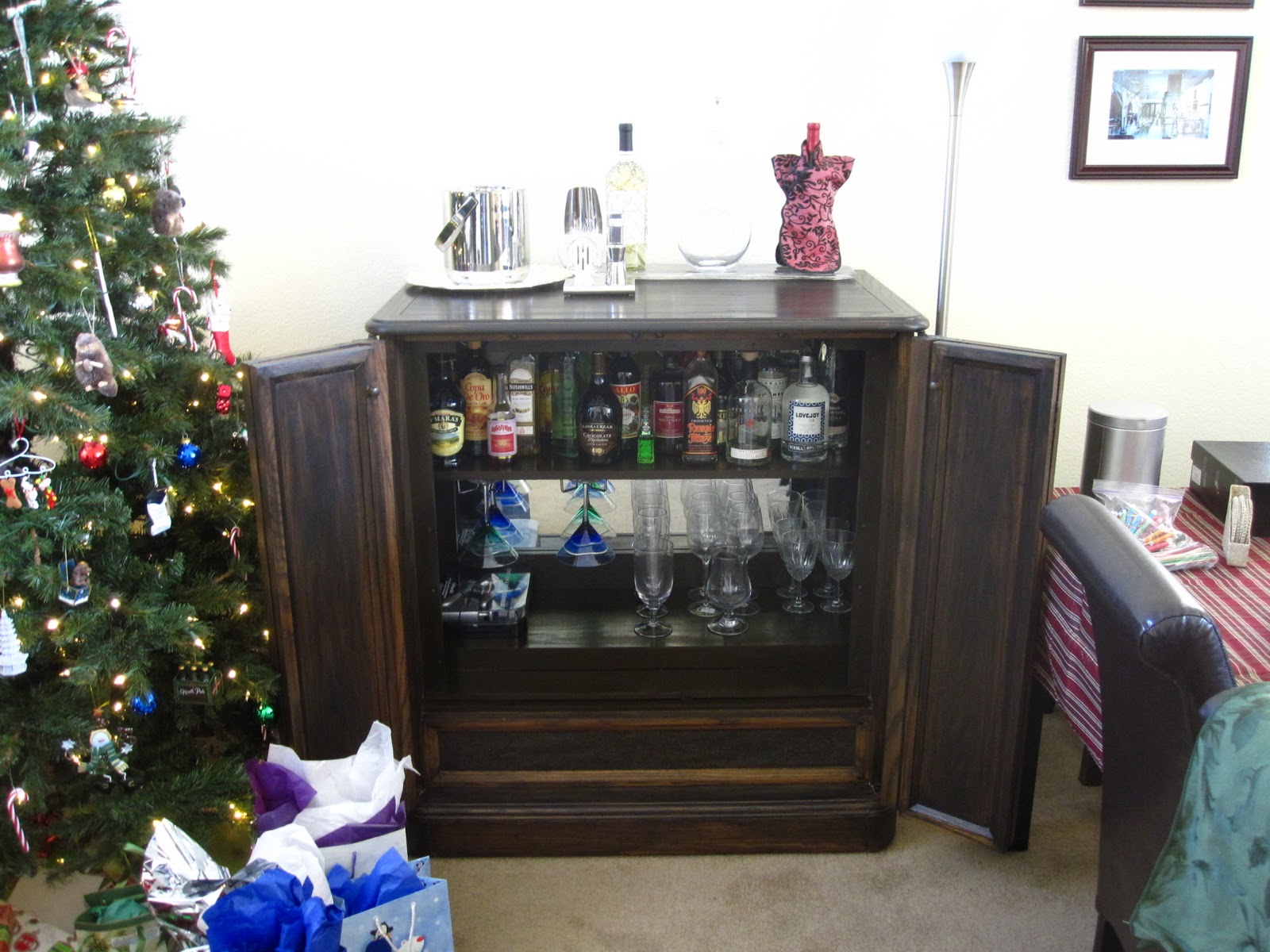
This is a little pet project I'd like to share that embodies the very essence of reuse, recycle, reclaimed, and repurposed.

 Here we have a wonderful old console TV that I'm sure so many have discarded over the years to the bulging landfills... one man's junk, can truly be another man's treasure.
 Large amount of e-waste that was properly recycled by a reputable e-waste recycler... I wonder how long all of this would take to decompose in the landfill?
 Gutted, sanded, and ready to be primed, painted, and stained. The interior shelves have been constructed from some scrap pine and some pieces of press board from another old piece of furniture.

 An old TV cabinet has now been given new life as a swanky cocktail bar complete with reclaimed mirror bar backing, low VOC interior paint, non toxic water-based stain, and repurposed under cabinet lighting. At the bottom, where the old speaker used to be has now been converted to wine storage complete with a hidden hinged front door panel. This same furniture piece could easily cost someone anywhere between $500 to $1000 at a retail furniture store, but all I had to do is use a little ingenuity, a little elbow grease, and save one man's junk from the landfill.


Wednesday, November 16, 2011
Building Green Doesn't Mean It Has To Be Modern
I think there's a group of folks out there that are apprehensive about green building and sustainable design due to the number of projects that have a very modern, minimalist design aspect to them. To some folks modern design can have a sterile, cold feel to it, especially for folks that are drawn to traditional styles such as Victorian or Cape Cod.
On a recent visit to New Orleans I witnessed many green building projects that were embracing the traditional Spanish and French styles of city such as Creole cottages and "shotgun" homes. A city like New Orleans strives to preserve it's architectural heritage and even when it comes to modernization of building components or sustainable upgrades, the builders, designers, and architects still manage to protect architectural aesthetics and historical design significance. Witnessing this evolution of building and design really gave me a lot to think about with regards to Sacramento and those who have a stigma against green building and design.


Green building and sustainable design does not have to consist of metal, concrete, and wood slathered interiors and exteriors. Sacramento architecture is known for it's wonderful American Craftsman style and Spanish Revival homes, and we could easily use some of the design features of these architectural styles in new green homes or green remodels... some features of these older homes were "green" before "green" existed!
Take Spanish Revival and its Mediterranean cousin: passive solar and excellent thermal design qualities, use of courtyard design for maximum air circulation... constructed using thicker, plaster covered walls, use of tile for longevity and wear, and the list really does go on. American Craftsman architecture gives us wonderful large eaves and overhangs for shading, excellent use of interior space with the incorporation of built-ins, deep set window casings for natural shading, beautiful porches to protect from the elements, and the list also goes on too.
I believe the best route for going green is to first develop an architectural style and then find a way to work in green materials and products, reclaimed and recycled materials, and sustainable principals so that you don't let the materials dictate the outcome. You can get all the LEED points in the world, but if you're not truly comfortable in your home or with your home's aesthetics you are only asking for trouble down the road with regards to the sustainability of your home.
Check out these links to see what's happening in New Orleans:
The Green Project
Make It Right
Musicians' Village
On a recent visit to New Orleans I witnessed many green building projects that were embracing the traditional Spanish and French styles of city such as Creole cottages and "shotgun" homes. A city like New Orleans strives to preserve it's architectural heritage and even when it comes to modernization of building components or sustainable upgrades, the builders, designers, and architects still manage to protect architectural aesthetics and historical design significance. Witnessing this evolution of building and design really gave me a lot to think about with regards to Sacramento and those who have a stigma against green building and design.

Green building and sustainable design does not have to consist of metal, concrete, and wood slathered interiors and exteriors. Sacramento architecture is known for it's wonderful American Craftsman style and Spanish Revival homes, and we could easily use some of the design features of these architectural styles in new green homes or green remodels... some features of these older homes were "green" before "green" existed!
Take Spanish Revival and its Mediterranean cousin: passive solar and excellent thermal design qualities, use of courtyard design for maximum air circulation... constructed using thicker, plaster covered walls, use of tile for longevity and wear, and the list really does go on. American Craftsman architecture gives us wonderful large eaves and overhangs for shading, excellent use of interior space with the incorporation of built-ins, deep set window casings for natural shading, beautiful porches to protect from the elements, and the list also goes on too.
I believe the best route for going green is to first develop an architectural style and then find a way to work in green materials and products, reclaimed and recycled materials, and sustainable principals so that you don't let the materials dictate the outcome. You can get all the LEED points in the world, but if you're not truly comfortable in your home or with your home's aesthetics you are only asking for trouble down the road with regards to the sustainability of your home.
Check out these links to see what's happening in New Orleans:
The Green Project
Make It Right
Musicians' Village
Monday, June 13, 2011
Getting the most from your ceiling fan
With the heat finally here in Sacramento it's time to start looking at our methods of keeping our homes effectively cooled. Many homes in the California Central Valley have ceiling fans, but a large majority of folks out there are not educated on how they can get the most efficiency from their ceiling fans.
 Ceiling fans can rotate either clock-wise or counter clock-wise and each direction serves a different purpose.When using your ceiling fan for cooling purposes, it's very important that you have your fan set to rotate counter clock-wise allowing for the fan to create a breeze that makes your body feel cooler. Ceiling fans are meant to cool people, not rooms... the cool breeze effect will allow you to raise the thermostat of your A/C reducing usage, but a ceiling fan is not designed to cool a room, only people in the room.
A lesser known use for a ceiling fan is warm air circulation in winter when home heating is necessary. When you are heating a room in cold seasons, a ceiling fan can be switched to rotate clock-wise allowing for the rising warm temperature in a room to be pulled down from the ceiling and distributed throughout the room. It is very important that when using a ceiling fan for warming a room you should keep the fan speed very low or else you'll be feeling a breeze that's more useful in warmer seasons.
Just like any appliance, ceiling fans also have ratings for efficiency and some even come backed by ENERGY STAR. Make sure you you get the best out of your ceiling fan(s)... they've stood the test of time for a reason and who really doesn't like to get the most out of something?

A lesser known use for a ceiling fan is warm air circulation in winter when home heating is necessary. When you are heating a room in cold seasons, a ceiling fan can be switched to rotate clock-wise allowing for the rising warm temperature in a room to be pulled down from the ceiling and distributed throughout the room. It is very important that when using a ceiling fan for warming a room you should keep the fan speed very low or else you'll be feeling a breeze that's more useful in warmer seasons.
Just like any appliance, ceiling fans also have ratings for efficiency and some even come backed by ENERGY STAR. Make sure you you get the best out of your ceiling fan(s)... they've stood the test of time for a reason and who really doesn't like to get the most out of something?
Thursday, May 26, 2011
Find New Homes For Your Junk... Out In Your Yard
In the age of sustainable design, why is it that I still find myself driving by mountains of junk sitting in front of people's homes waiting for trash pick up? Instead of spending tons of money at home stores and nurseries why not repurpose your old junk into new landscape creations.

Anything can be reused or repurposed with a little elbow grease. Do you have an old, broken ironing board you want to get rid of? How about turning that old ironing board into a plant shelf or maybe a whimsical cocktail bar?

There are so many options when you reuse or repurpose things you consider junk. An old BBQ can become a fire pit or a rustic planter, broken pottery or glass can become decorative mulch for planters, old counter tops can be broken into pieces and become stepping stones, the list truly is endless.
Anyone can be green and practice sustainability if you stop and think before you throw things away. Take a step back and look at the item, use a little imagination, you never know what you might come up with. People always use the expression, "one man's junk is another man's treasure", but maybe we can figure out how our own junk can be made into our own treasure?


Anyone can be green and practice sustainability if you stop and think before you throw things away. Take a step back and look at the item, use a little imagination, you never know what you might come up with. People always use the expression, "one man's junk is another man's treasure", but maybe we can figure out how our own junk can be made into our own treasure?
Thursday, May 5, 2011
Check out Energy Upgrade California
If you haven't already... be sure to check out the Energy Upgrade California website. All you have to do is enter "Sacramento County" and you will be brought to a specialized page that gives you rebates and incentives that are available in Sacramento County for doing "green" upgrades. You can also locate certified contractors in your area along with all kinds of tips and facts.
This is a cooperative program that is funded by the American Recovery and Reinvestment Act and managed by the California Energy Commission. The basis of the program is to help raise energy efficiency percentages for California residents while helping out of work contractors get the necessary training to do the energy retrofit work. This program is truly a "win win" program for residents of California.
This is a cooperative program that is funded by the American Recovery and Reinvestment Act and managed by the California Energy Commission. The basis of the program is to help raise energy efficiency percentages for California residents while helping out of work contractors get the necessary training to do the energy retrofit work. This program is truly a "win win" program for residents of California.
Thursday, March 17, 2011
Check out my new column at the Sacramento Examiner
Along with my own blog here at It Pays To Be Green In The Valley I am now writing for the Sacramento Examiner as their Green Building Materials Examiner. If you have time you should definitely check it out:
http://www.examiner.com/green-building-materials-1-in-sacramento/benjamin-griffin
http://www.examiner.com/green-building-materials-1-in-sacramento/benjamin-griffin
Saturday, March 12, 2011
Nature's Affordable, Efficient Patio Cover
Valley residents love to get their shade from pre-fab, aluminum patio covers. Proper shading of one's home is essential in the sunny California Central Valley, but at what price? Why not take advantage of one of Mother Nature's greatest patio covers... trees.
When properly placed on your lot, a tree can be the best kind of patio cover. Whether you're looking for shade all year long (evergreen), or you're looking for low winter sun to warm your home (deciduous), the right kind of tree can fit your needs.

Besides being green and environmentally friendly, you can also have your natural patio cover free if you live in the Sacramento area. Through a partnership with SMUD and the Sacramento Tree Foundation, Sacramento County residents and SMUD customers can get shade trees free of charge. This service allows you to have a community forester come to your home, check your lot and home dimensions for perfect placement, and figure out what would be the best option to shade your home and help you with energy costs and carbon offsets. It really is a great program in so many ways.
With all of this being said, would you rather spend thousands of dollars on an aluminum patio cover that's comprised of materials from all over the world with who knows what kinds of chemicals; or would you rather have a beautiful shade tree that helps you, your neighbors, and probably the greater community?
When properly placed on your lot, a tree can be the best kind of patio cover. Whether you're looking for shade all year long (evergreen), or you're looking for low winter sun to warm your home (deciduous), the right kind of tree can fit your needs.

Besides being green and environmentally friendly, you can also have your natural patio cover free if you live in the Sacramento area. Through a partnership with SMUD and the Sacramento Tree Foundation, Sacramento County residents and SMUD customers can get shade trees free of charge. This service allows you to have a community forester come to your home, check your lot and home dimensions for perfect placement, and figure out what would be the best option to shade your home and help you with energy costs and carbon offsets. It really is a great program in so many ways.
With all of this being said, would you rather spend thousands of dollars on an aluminum patio cover that's comprised of materials from all over the world with who knows what kinds of chemicals; or would you rather have a beautiful shade tree that helps you, your neighbors, and probably the greater community?
Saturday, November 20, 2010
A Public Service Announcement For Those Who Water The Road...
This is my PSA for all of you out there who waste water with your lawn sprinklers! Either you have no idea they need adjusting, you don't know how, or maybe you just don't care? Whatever the reason may be, as a homeowner or building owner it may be worth your while to learn how to take care of your lawn irrigation system or possibly hire someone to do it for you.

I know there is information all over the place regarding taking care of your lawn irrigation system. I see information from water districts, pamphlets at hardware stores, television campaigns, and even signs on buses going down the street... what will it take for people to take notice of their water wasting ways? I implore you to take a look at your water bill... what does it show? Would you like it to be lower? How about going "green" without spending tons of money ripping out your lawn or installing expensive irrigation equipment?
Well, this is my list of common problems I see on a continuous basis and how you can correct them and save some money and conserve water:
If you pay attention to your lawn irrigation system you can really do your part to conserve water, help the environment, and also put a little "green" back in your pocket at the same time. You don't have to go out and put in a drought tolerant garden or permeable paving... you just need to be a little more consciences and take care of what you all ready have. Too many homeowners and business owners are out there right now wasting water and money just because they're lazy or they just don't care. It's up to you to do your part... now go outside and do some "public service" and make sure your lawn sprinklers are watering your lawn... not the road!

I know there is information all over the place regarding taking care of your lawn irrigation system. I see information from water districts, pamphlets at hardware stores, television campaigns, and even signs on buses going down the street... what will it take for people to take notice of their water wasting ways? I implore you to take a look at your water bill... what does it show? Would you like it to be lower? How about going "green" without spending tons of money ripping out your lawn or installing expensive irrigation equipment?
Well, this is my list of common problems I see on a continuous basis and how you can correct them and save some money and conserve water:
- Please don't water you lawn or planting beds in the middle of the day... you lose tons of water to evaporation and if the temperature is hot you run the risk of scalding your plants or lawn. Every water district has a watering time frame they tell their customers... watering in the early morning from 1AM to 5AM is a great time frame to run sprinklers.
- There is no need to run your sprinklers every single day, especially in wet seasons! It's funny, even in the summer months I water my lawn 2 to 3 times a week and my lawn is just as green as the folks next to me who run their sprinklers every single day... they even run their sprinklers in the rainy season! With proper maintenance and spray measurements you can easily maximize your watering and eliminate the need for constant and over-watering.
- Please take notice that your sprinklers are watering the road or your neighbor's house! There are different sprinkler heads for different uses and they can easily be adjusted with a screw driver if they're standard spray heads or adjusted by hand if you have impact rotor sprinklers. All sprinkler heads state the pattern of spray and how far the spray can travel. If you have a 3' section of lawn, please don't install a sprinkler that sprays 10' in a full circle pattern! If you match the right sprinkler with the right size area to be watered you will save water, head aches, and lots of money in the long run.
- If you have a broken sprinkler head... replace it. Whether it's you or the gardener down the street, someone needs to replace the broken sprinklers in your yard. Maybe you don't notice because your sprinklers run at night, but you will notice when you look at your water bill a little closer. A broken lawn sprinkler head can waste gallons of water and hurt you lawn and plants by either over watering or under watering depending on which way the wasted water is flowing. If the broken sprinkler is close to you home or garage you may develop foundation problems over time if all that wasted water is soaking into the ground where a building's foundation is located. The choice is yours... spend a couple dollars to fix a sprinkler or suffer the consequences down the road in a more costly situation.
If you pay attention to your lawn irrigation system you can really do your part to conserve water, help the environment, and also put a little "green" back in your pocket at the same time. You don't have to go out and put in a drought tolerant garden or permeable paving... you just need to be a little more consciences and take care of what you all ready have. Too many homeowners and business owners are out there right now wasting water and money just because they're lazy or they just don't care. It's up to you to do your part... now go outside and do some "public service" and make sure your lawn sprinklers are watering your lawn... not the road!
Friday, November 5, 2010
Brick In The Tank???
How many people remember the old brick in the toilet tank trick for saving water? It was a clever trick during those water shortages and droughts of the past, but never truly a great fix for those water wasting toilets. I always wondered if people considered the downside of putting a brick in a tank of water... how about the clay residue clogging pipes and the flushing mechanism? Many other ideas came throughout the years after the "brick trick"... bottles full of sand, metal such as bolts and screws, and bottles full of water.


There were all kinds of novel ideas, but many failed due to trapped air, evaporation, or too much movement causing conflict with the toilet's mechanics. Even more prevalent was the fact that a small bottle of water only displaced a small amount of water compared to the gallons flushed of all the toilets before the standard 1.6 GPF, (gallons per flush).
New low-flow and dual flush toilets have now entered the picture and become the standard for green building enthusiasts, but what about those who have a perfectly good toilet and don't want to spend or waste the money for a new toilet? How about a water displacement bag designed for toilet tanks or a conversion kit that converts your standard toilet to a dual flush toilet?
There are a lot of great products on the market these days to help folks who have water hogs for toilets. It's very important to focus on toilets when it comes to water conservation; a large amount of your home's water usage is due to flushing toilets. Current plumbing code standards call for a minimum of 1.6 GPF, but I know there are still a large number of toilets out there that are flushing at a rate of 3.75 GPF and higher... which means it's time to take action, and figure out what you can do to fix the problem and save yourself some money.
In the Sacramento Valley you can find water displacement bags and dual flush conversion kits at some large hardware stores and limited small hardware stores. The best source is to order from the internet from Amazon.com and their associates or from conservation sites like the following:
New Resources Group
its easy being green
It's also a good idea to check with your local water provider to see if they offer any incentives or free products!
Sunday, October 10, 2010
Just Because You Go Solar, Doesn't Mean You're Green...
The other day, a member of my family asked me if I thought their roof was suitable for solar panels. I went outside, took a look, and said, "sure, but why do you want solar panels?"The response I got was pretty funny... "I figured with all the incentives right now, I could get some solar panels and then I'd be doing my part by being green...". This response from a member of my family is pretty common these days, with so many people and companies pushing "being green" so many in the general public are so misinformed. This is my queue... my chance to spread the word.

Photovoltaic systems are awesome... if I had the funds, I'm sure I would be right there with the rest of the folks setting up appointments with the local solar salesman, but I tend to know a thing or two that keeps me away from PV systems... besides not being able to afford it.
Would you ever go out and buy new tires and an alarm system for a car you that you don't have? How about a new surround sound system and DVD player for the TV that you don't seem to have?? What I'm trying to get at... is why spend thousands of dollars on a new photovoltaic system for your house if the rest of your house is an energy efficiency "nightmare". If your home isn't energy efficient you'll never truly see the rewards promised by that solar salesman when you spent those thousands of dollars.
I always tell people that solar panels are an expensive band-aid when the envelope of your home is like "Swiss cheese". By "Swiss cheese" I mean that your home is leaking energy due to poor insulation, bad windows, poor heating and cooling, and so on... just like the holes in Swiss cheese. How about a home energy audit to see how much energy you're consuming and where you're wasting it? How about switching your incandescent bulbs to CFLs? What about the instant savings you get when you spend the money and time on weatherizing your home with weather stripping, spray foam, and caulking?? There are so many things a homeowner can do to be more energy efficient, truly "green".
After a fun, lengthy discussion I actually saw the light bulb go on inside my family member's head... "why don't they tell you about these things when you're considering buying solar panels?", was one of the many questions I heard throughout our discussion. I had to explain that at the end of the day it's a business just like any other money making business, people are into making "green" off of people trying to be"green". It's a shame that people take advantage of those who are trying to do good for the environment and be more sustainable. These are the kinds of discussions we need to have with our families, neighbors, friends, and coworkers. The more we educate one another the better chances we have at doing good and doing things right. It really does take more than solar panels to be "green" in this ever changing world.
Monday, September 13, 2010
One Bulb Can Change A Lot...
As the selection of light bulbs grow in the aisles of the nation's hardware stores, many arguments have begun to surface regarding which is better, worse, and everything in between. Like many products, there are pros and cons and these pros and cons only continue to multiply as the technology continues to grow.
On a short list it's pretty clear to see that CFL bulbs are better than incandescent bulbs, and LED bulbs are better than both of them, but one must really pull back the layers of the onion to see the true pros and cons for each comparison.
Here's a great comparison video courtesy of alternativee.org:
It's pretty easy to see where the energy efficiency lies, but many other factors come along with each type of bulb. In my own home, I have opted to go with CFL bulbs in almost all my fixtures minus the fixtures that are on occupancy sensors. CFL bulbs can't handle the constant on/off from the sensors compared to incandescent bulbs. I would love to use Edison base LED bulbs in my home, but the price point is still too high and the technology still has a little ways to go before they can truly compete with CFLs. I do recommend using LEDs for under-cabinet lighting, holiday lighting, and flashlights/lanterns since the technology is pretty stable and the use factor is pretty low.
On a short list it's pretty clear to see that CFL bulbs are better than incandescent bulbs, and LED bulbs are better than both of them, but one must really pull back the layers of the onion to see the true pros and cons for each comparison.
Here's a great comparison video courtesy of alternativee.org:
It's pretty easy to see where the energy efficiency lies, but many other factors come along with each type of bulb. In my own home, I have opted to go with CFL bulbs in almost all my fixtures minus the fixtures that are on occupancy sensors. CFL bulbs can't handle the constant on/off from the sensors compared to incandescent bulbs. I would love to use Edison base LED bulbs in my home, but the price point is still too high and the technology still has a little ways to go before they can truly compete with CFLs. I do recommend using LEDs for under-cabinet lighting, holiday lighting, and flashlights/lanterns since the technology is pretty stable and the use factor is pretty low.
Each bulb type has a few major drawbacks for me, but as long as you weigh the pros and cons it's easy to derive at a choice.
- Incandescent bulbs use a lot of energy and actually lose a majority of that energy through heat loss. If you live in a hot climate, you really don't need your light bulbs raising your home's temperature causing more money to be spent on cooling. Due to that heat loss, your incandescent bulbs are expelling more heat then you're receiving in actual lumens, i.e. LIGHT.
- CFL bulbs contain mercury which can be dangerous in certain amounts. Due to the mercury in CFL bulbs special precautions should be taken when disposing burnt out or broken bulbs. You should always dispose CFL bulbs at specialized recycling centers... never throw them away with your trash! Some people feel that the actual light output from CFL bulbs is sub-par to incandescent bulbs, but I have never personally had a problem.
- LED bulbs are still just too new in the market place to really be measured against other standard bulbs. Price is certainly a factor right now, but other factors include actual measurement of bulb life span, proper bulb ventilation for cooling, size retro fitting, and actual light output compared to incandescent and CFL bulbs.
There are many types of lighting available in the market place these days. There are also many other bulb types that I did not mention due to there use in commercial settings or the low level of use in residential settings. Lighting technology is still ever changing and manufactures are coming up with new ideas everyday... even the incandescent bulb is still being advanced to keep up with all the other new technological advances. It really comes down to what you want from you light bulb and how much you want to invest in it. Nothing is ever perfect, but as long you do your homework, the power is ultimately in your hands...
All hardware stores including major and mom and pop retailers carry some sort of line of incandescent and CFL bulbs, but LED bulbs are little harder to find. It's always smart to check with you local utility provider before going out to purchase light bulbs, some utility providers provide rebates, coupons, or even discount purchase programs for energy efficient light bulbs. Please see the links below for the Sacramento Valley:
Sacramento Municipal Utility District-
http://www.smud.org/en/rebates/Pages/index.aspx
Pacific Gas & Electric-
http://www.pge.com/myhome/saveenergymoney/rebates/light/products/
Saturday, August 14, 2010
Why Not Save The Rain For Another Day?
With fall and winter right around the corner it's time to start thinking about rain. When you're up on that ladder this fall, cleaning out your gutters, you should give a good thought to saving that rain for another day. With water demands on the rise in the Sacramento Valley these days; why not save that rain water and reuse it for something other than watering the streets and gutters?

Why not rain water harvesting? No, I'm not talking about complex water piping systems with huge cisterns... I'm talking about simply buying or building a rain barrel and hooking it up to one of your downspouts for safe keeping.
Why not rain water harvesting? No, I'm not talking about complex water piping systems with huge cisterns... I'm talking about simply buying or building a rain barrel and hooking it up to one of your downspouts for safe keeping.
Utilizing a rain barrel at your home is a great way to save on garden watering costs and it allows that precious rain water to be saved from our storm water systems and waterways. Diverting even a small amount of water could help make an impact on seasonal flooding. With current trends in green technology and the natural desire to be "green" it's now easier than ever to get involved. These days you can pick up a relatively inexpensive rain barrel at major retailers such as Home Depot and Lowe's or smaller mom & pop hardware stores if you would rather skip the construction process. Which ever way you choose, you can't go wrong with saving that rain water for another day...
In the Sacramento Valley you can find simple rain barrels at many fine retailers or you can purchase or salavage the materials to make your own.
Monday, June 21, 2010
Welcome to the Age of Sensors...
We use the technology of sensors in all aspects of our lives, but our homes and buildings are just now catching up. The California Title 24 Energy Codes give you the choice between occupancy sensors or dimmer switches, but in certain areas and circumstances, it really is better to choose the sensor.


There are also other products on the market such as passive infrared and sonic occupancy sensors that are built into surge strips so that electronics can be turned off when no one is in the area, but I find these products very hazardous to electronics and not very conducive to people coming and going from a room. They can work in a commercial or institutional setting, but should not be used in a residential settings unless they are properly factored into an overall design.
When deciding on where to put your sensors you need to take into account a couple of items:
Though occupancy sensors are not technically "green" products, they do provide a "green" service to homes and businesses. Have you ever gone to someones house and wondered why the lights are on in every room of the house? Have you ever been driving by an office or school at night and wondered why the lights are all on? This could all be changed or possibly eliminated with the help of occupancy sensors. For years the main focus has been on commercial and institutional applications due to the large amounts of energy waste, but homeowners can also do their part. The link below is to an informational report from 1997 by Green Seal that outlines the use of occupancy sensors and their benefits:
The main focus of this report targets commercial and institutional applications, but the information contained within is invaluable to all who have energy waste. Our homes can be oozing energy waste, especially if we have a lot of occupants living under one roof. Where do our homes need help? Where are the best possible places to put occupancy sensors so we maximize our dollar?
Right off the back I will tell you that it doesn't help to put them in every room in your house. You have to proactive and calculated to get the most bang for your buck. There are a lot of different products to choose from and they all serve a purpose and a function.
For residential applications you can choose from hard-wired, passive infrared occupancy sensors or manual "ON" passive infrared versions:
Edison base, screw in passive infrared occupancy sensors for bare bulb sockets:
There are also other products on the market such as passive infrared and sonic occupancy sensors that are built into surge strips so that electronics can be turned off when no one is in the area, but I find these products very hazardous to electronics and not very conducive to people coming and going from a room. They can work in a commercial or institutional setting, but should not be used in a residential settings unless they are properly factored into an overall design.
When deciding on where to put your sensors you need to take into account a couple of items:
- What kind of traffic does the room or space get during normal use?
- What kind of fixture or fixtures are present?
- What kind of luminary or luminaries do these fixtures use?
Looking at the room or space will help you understand the needs of the space and whether or not an occupancy sensor is conducive to your energy conservation goals. Rooms such as bathrooms, garages, laundry rooms, and closets are some of the best an easiest to figure out. Other rooms in your house may be a little harder such as bedrooms and living rooms; or just plain difficult like kitchens, offices, and family rooms.
Bathrooms are nice because you can put in an occupancy sensor to control the exhaust fan which will allow you to set an allotted time for the fan to run once a person has entered or left the room. Bedrooms may be a little harder due to high levels of usage, but can sometimes benefit from a manual "ON" occupancy sensor if people are prone to leaving lights on all the time. The rooms and spaces labeled as difficult are difficult due to frequent and infrequent usage that may not coincide with a sensors timer or range of motion. If you don't fully think it out you may end up with strange light shows and burnt out fixtures/luminaries in your difficult rooms and spaces.
Numbers 2 and 3 go hand in hand... different occupancy sensors work in different ways when it comes to light fixtures and luminaries that they utilize. First and foremost, you should always follow the guidance of the manufacturer's specifications when it comes to these products. All of these products from the sensors to the luminaries should be tested products (Underwriters Laboratories or other testing agencies), so that you know their limitations and how they should be properly used.
Fluorescent and compact fluorescent (CFL) luminaries do not generally work well with occupancy sensors and the life span of a fluorescent can be drastically cut due to some hard-wired sensors and most Edison base screw types. Fluorescent bulbs have a delayed start up time and cool-down period after being shut off which does not always work well with occupancy sensors. If you go in and out of a room with a sensor and you're using a fluorescent, you run the risk of the bulb burning out quickly or possibly burning out the fixture. Most Edison base type sensors explicitly require incandescent luminaries and some tested LEDs, but a lot LEDs also have a start delay similar to a fluorescent.
After digesting all of this information your finally ready to figure it all out and put together your plan. Even if you only install an occupancy sensor in one room of your house you can still make a difference in your energy consumption and waste. The code gives you a choice, but it never really tells you which is the better choice... at least now you know what one of those choices can do for you and your home.
One of the major manufacturers of hard-wired sensors is Leviton:
http://www.leviton.com/OA_HTML/ibeCCtpSctDspRte.jsp?section=10883&minisite=10026
For Edison base screw type sensors it's First Alert:
http://www.firstalert.com/HOME-SECURITY/OTHER-HOME-SAFETY/lighting
And there are a lot of others such as Wattstoppers, GE, and Z-Wave.
In Sacramento and the greater valley you can pick up occupancy sensors at any major hardware retailer and some smaller hardware stores. If you can't locate the right product you can always find it on the internet direct from the company or from any one of the many large internet retailers such as SmartHomeUSA.com.
Sunday, May 16, 2010
FLOR modular tiles- a personal review
You see them everywhere... from magazines like dwell to Ikea catalogs, FLOR modular tiles are the in thing for any modern space. I always thought FLOR products were cool looking when I saw them, but I didn't really get interested in them until I saw that FLOR products are green products in accordance with LEED and Build It Green standards; carrying a sign-off from Green Label Plus. With FLOR's use of recycled and renewable materials and their "Return and Recycle Program" FLOR modular carpet tiles are much more than an innovative designer flooring.
To get a closer look and feel for FLOR's products I decided to place an order for some samples of their different carpet tiles ranging from super shaggy, "Shaggy Sheep" to the much more basic, "Fez".
To get a closer look and feel for FLOR's products I decided to place an order for some samples of their different carpet tiles ranging from super shaggy, "Shaggy Sheep" to the much more basic, "Fez".
I have to admit I had a lot of fun with the samples... I did everything from spill stuff on them to see how easy they were to clean, to cutting and ripping them to test the durability. I really liked the results I saw, these carpet tiles could really be worth their weight in a multitude of circumstances. Being that you piece together this flooring with multiple tiles, it would be simple to take care of spills by removing the effected tiles, cleaning them, and putting them right back after they dry. Liquid spills will not permeate through the backing of these tiles so you don't have to worry about spreading. The tiles work quite well with vacuums and brooms, but I did have a negative experience with the "Shaggy Sheep" tile. The "Shaggy Sheep" tile has a very long, twisted shag that really sheds under certain conditions. Heavy traffic, strong vacuum suction, and pets do not mix with the "Shaggy Sheep". This tile gets very messy, leaving fibers all over the place to pick up and the tiles themselves are not easy to clean like the others I tested. Besides the shag, the overall experience was very positive.
FLOR has a lot of different choices when it comes to their products. They have all different colors, patterns, textures, and even carpet tiles for different places such as outdoors and commercial settings. FLOR modular carpet tiles are made in the US and have a decent price point in comparison to high-end area rugs and designer carpeting; along with the assurance that the products are certifiably green.
If you're interested in FLOR modular carpet tiles or would like to make a purchase, please check out their website:
http://www.flor.com/service/flor/index.html

Where to buy locally in the Sacramento Valley:
Lumens Light + Living, 2028 K Street, Sacramento, CA 95814- 916.444.5585
http://www.lumens.com/
Some area Lowe's retail stores
http://www.lowes.com/
Or you can buy direct from FLOR and have them shipped...FLOR has programs in place to offset CO2 and fossil fuel and energy usage to minimize environmental impact. Go check it out...
Saturday, May 1, 2010
Throwing Tires In Your Yard Isn't Just For Hillbillies Anymore!
Now I'm not literally telling you to throw car tires in your yard... I'm talking about rubber mulch made from shredded, recycled car tires for your landscape. Once you've checked out this product you'll never go back to wood mulch again.

What was once stacked as high as an elephant's eye in junk yards and dumps has reinvented itself into all kinds of useful products for the green movement. I love running on tracks that are made from recycled tires and I enjoy crazy art made from them, but recycled rubber tire mulch brings it home for the general homeowner who wants to make a difference.
Recycled rubber tire mulch is a product that provides multiple benefits with very little drawback. Wood mulch has to be constantly replenished through the seasons, and easily gets blown all around or floats away when a good storm comes through. Not the same with rubber mulch... you get a product that that is long lasting and has the density to stay put while still allowing for moisture to permeate through to plant roots. Recycled rubber tire mulch's only negative draw back is it's up front cost. Wood mulch will usually always have a lower price point due to it's lower production cost, but down the road you actually get a better savings when you go with the rubber mulch. All you have to do is estimate how much you would spend replenishing your wood mulch over the years and then do the math! Bite the bullet and spend the money for the recycled rubber tire mulch... you save money in the long run.
Below is a picture of rubber mulch that's been in my front yard for over a year and a half now:

Since installing it in my own yard I've been thoroughly pleased with the results. It's usually recommended that you install a weed barrier under your mulch, but I went ahead and applied it right over the existing soil. So far I have noticed very little weed growth compared to the rock and landscape fabric I had originally. I strongly believe that the density of the recycled rubber tire mulch helps deter weed growth even though it's not an advertised selling point marketed by the manufacturers.
With all of this said, I really do have to recommend that you start throwing "tires" in your yard. You get to save money over time, you get a product that lasts against time and the elements, and most of all... you get to be green and sustainable with your choice to use recycled rubber tire mulch.
Below is a list of Sacramento Valley businesses who sell recycled rubber tire mulch. It can be purchased at Home Depot or Lowe's, but they carry one brand and it's very over priced and not locally produced.
The Brickyard, Sacramento and Vacaville- 916.290.4800 and 707.470.1600,
Resource Building Materials, Rancho Cordova- 916.985.2625,
Rocklin Rock Sand and Gravel, Rocklin- 916.624.7625,
no website...
Foothill Landscape Materials, Shingle Springs- 530.677.4716,
Thursday, April 22, 2010
The Pyramid Of Conservation

I received this great action plan from a friend and had to share it. Minnesota Power created this based upon the old food nutrition pyramid that we all grew up with and it's an excellent chart for residential conservation and energy efficiency.
Check out all the information here:
I like this pyramid so much that I'm in the process of creating a slightly tweaked version for California. As you can tell from the organization of the pyramid, some items need to be moved around to meet California's climates and energy consumption.
Be looking out for my version in the coming month...
Saturday, April 10, 2010
Cork: the other great wood...
Let's face it... bamboo is every where! I think companies are making everything out of bamboo these days just to say they're being "green". Bamboo is a great wood and I highly recommend it, but sometimes it's nice to venture out of the old comfort zone. Why not cork? No, we're not talking about recycling wine corks, we're talking about a highly renewable wood that is fabricated utilizing the bark of the Cork Oak tree. A Cork tree doesn't even have to be cut down to get the wood, the wood is derived from a bark peeling process that allows for the tree to eventually regenerate just like shearing a sheep for it's wool. Check out this video clip:
I'm a big fan of cork! It's a very versatile wood that can be used for flooring, paneling, furniture, underlayment, acoustics, and too many other products I don't have space to list. Cork is a very resilient wood that makes great flooring for it's ability to bounce back to form and it's noise dampening properties. I am personally a huge fan of cork's natural hypoallergenic make up and decided to install a floating cork floor in my guest bathroom:

With today's market cork is available in a wide range of patterns and tones, tiles and planks, and forms and thicknesses. Although cork and bamboo are not completely interchangeable; they should both be considered when looking for "green" flooring or wall paneling choices.
When purchasing cork it is imperative that you do your due diligence and make sure that the cork has not been treated with any VOC compounds... some lower grade, inexpensive cork has been treated therefore cancelling out cork's environmental and sustainable qualities. Below is a list of local Sacramento Valley businesses who sell cork products, make sure you check them out:
Green Sacramento, Sacramento- 916.448.8109,
http://www.greensacramento.com/floors_cork.html
Lumber Liquidators, Sacramento- 916.369.7300,
http://www.lumberliquidators.com/catalog/thumbnail.jsp?categoryId=448§ionId=2&sort=TA&subCategoryId=0&ref=By%20Category;274500007
Simple Floors, Sacramento- 916.363.6211,
http://www.simplefloors.com/products/Cork-Flooring/category6.aspx
Carpeteria, multiple locations,
http://www.carpeteria.com/Sacramento/contentpage.aspx?Id=3084
There are many more to choose from, but I'm not going to list them all. It's very easy to find cork flooring, but harder to locate cork sheets.
I'm a big fan of cork! It's a very versatile wood that can be used for flooring, paneling, furniture, underlayment, acoustics, and too many other products I don't have space to list. Cork is a very resilient wood that makes great flooring for it's ability to bounce back to form and it's noise dampening properties. I am personally a huge fan of cork's natural hypoallergenic make up and decided to install a floating cork floor in my guest bathroom:
With today's market cork is available in a wide range of patterns and tones, tiles and planks, and forms and thicknesses. Although cork and bamboo are not completely interchangeable; they should both be considered when looking for "green" flooring or wall paneling choices.
When purchasing cork it is imperative that you do your due diligence and make sure that the cork has not been treated with any VOC compounds... some lower grade, inexpensive cork has been treated therefore cancelling out cork's environmental and sustainable qualities. Below is a list of local Sacramento Valley businesses who sell cork products, make sure you check them out:
Green Sacramento, Sacramento- 916.448.8109,
http://www.greensacramento.com/floors_cork.html
Lumber Liquidators, Sacramento- 916.369.7300,
http://www.lumberliquidators.com/catalog/thumbnail.jsp?categoryId=448§ionId=2&sort=TA&subCategoryId=0&ref=By%20Category;274500007
Simple Floors, Sacramento- 916.363.6211,
http://www.simplefloors.com/products/Cork-Flooring/category6.aspx
Carpeteria, multiple locations,
http://www.carpeteria.com/Sacramento/contentpage.aspx?Id=3084
There are many more to choose from, but I'm not going to list them all. It's very easy to find cork flooring, but harder to locate cork sheets.
Subscribe to:
Posts (Atom)


